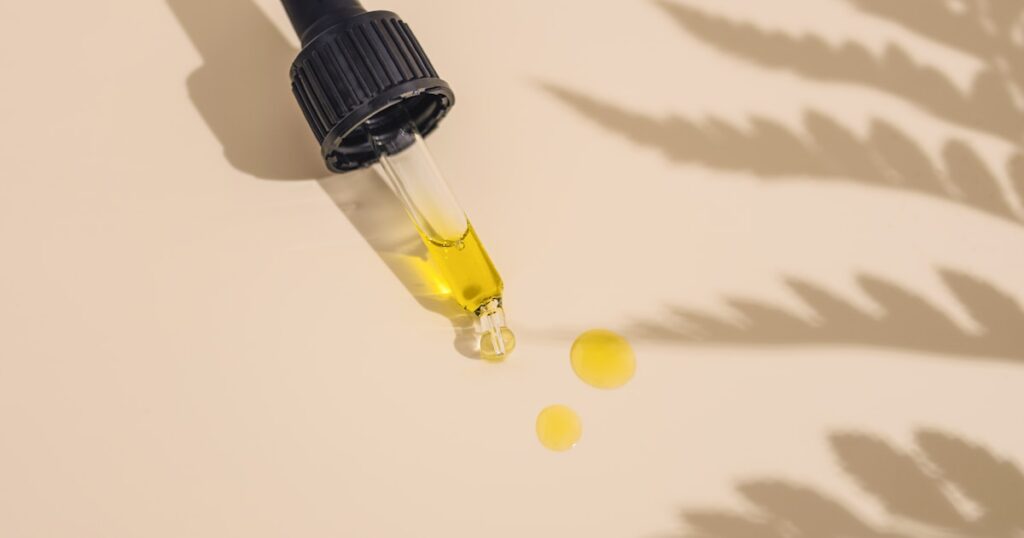
Bakuchiol was supposed to be the answer to everyone who wanted retinol results without the retinol fallout. Clean enough for the green beauty crowd, effective enough to matter. I was skeptical in 2019 and tried the Herbivore serum anyway because the formula looked intelligent and I had been burned badly the year before by a $180 peptide serum from a brand I will not name here, except to say it had a minimalist black tube and a lot of press coverage, and after eight weeks my skin looked exactly the same. So I was primed to be unimpressed. The Herbivore surprised me. That is the short version. The longer version is what actually matters for your wallet.
| Product | Price | Best For |
|---|---|---|
| Herbivore Botanicals Bakuchiol Retinol Alternative Serum | $54 | Sensitive skin avoiding retinol irritation entirely |
| Sunday Riley Auto Correct Brightening and Depuffing Eye Contour Cream | $65 | Under-eye circles plus fine lines, simultaneously |
What Bakuchiol Actually Is, and Why the Marketing Drives Me Insane
Bakuchiol is a meroterpene compound extracted from the seeds of the Psoralea corylifolia plant. It influences some of the same cellular pathways as retinol, specifically it upregulates certain collagen genes, which is why the “natural retinol” label stuck. That label is also the source of my ongoing frustration with this category.
Bakuchiol is not retinol. It does not bind to the same receptors. It is not converted to retinoic acid in the skin the way retinol is. Calling it “natural retinol” is the skincare equivalent of calling oat milk “natural dairy.” Useful shorthand, genuinely misleading in practice. The truth about bakuchiol, is this natural retinol actually worth the luxury price tag, starts with understanding that you are buying a different mechanism entirely, one that is gentler by design and slower by consequence.
If you have been sold on bakuchiol as a one-to-one swap for your retinol routine, someone sold you something imprecise.
The Case For Bakuchiol That Actually Holds Up
Here is what the research does support: a 2018 double-blind study published in the British Journal of Dermatology found that 0.5% bakuchiol twice daily produced comparable improvements in fine lines and pigmentation to 0.5% retinol over twelve weeks, with significantly less scaling, dryness, and stinging. That is not nothing. That is a real finding from a real trial.
The population that study describes is not you if you have been using retinol for three years and your skin has adapted. It is you if retinol has consistently wrecked your barrier, if you are pregnant or planning to be, or if you have rosacea and the inflammation retinol triggers costs you more than the results are worth. For that group, bakuchiol is a legitimate answer rather than a compromise.
I used the Herbivore Botanicals serum for six weeks before I noticed anything measurable. Week two, texture started softening. Week four, the hormonal congestion along my chin was visibly reduced. Week six, my skin looked more even in natural light. Not dramatic. Consistent.
|
Editor’s Pick Herbivore Botanicals Bakuchiol Retinol Alternative Serum $54 This serum delivers 0.5% bakuchiol in a lightweight squalane base that absorbs without the greasy finish you expect from plant oils. It genuinely calms while it treats, but if your goal is aggressive anti-aging results on a timeline, it will disappoint you. As an Amazon Associate I earn from qualifying purchases. |
The Herbivore Bakuchiol Serum: What You Are Actually Buying
The Herbivore Botanicals Bakuchiol Retinol Alternative Serum runs $54 for 1 oz. The active is 0.5% bakuchiol, which matches the concentration used in the study above. The base is squalane, which is the correct call for a bakuchiol serum because squalane does not oxidize, does not feel heavy, and plays well with every other ingredient in a routine. This is a formulator who understood the assignment.
The limitation is real and worth saying plainly: if you are over 45 with established wrinkles and significant photoaging, this serum alone will not give you the results a properly tolerated retinol or a retinoid would. Bakuchiol at 0.5% twice daily is a prevention and maintenance tool more than a correction tool. The marketing does not always say this. I am saying it.
At $54 versus the $28 options flooding the market, the price difference is justified by concentration and formulation quality. At anything above $75 for a bakuchiol serum, you are paying for packaging and brand cachet. The ingredient itself does not get more effective at higher price points.
The Eye Area Question
The under-eye area has its own set of problems, and a general bakuchiol serum addresses maybe half of them. Thin skin, yes. Fine lines, somewhat. Puffiness from fluid retention and poor lymphatic drainage, not really. Dark circles from vascular pooling or hyperpigmentation, depends on which kind you have and how aggressively the formula targets it.
This is where a product built specifically for the eye area earns its place in a routine, or does not, depending on whether the formula is actually solving the right problem.
|
Editor’s Pick Sunday Riley Auto Correct Brightening and Depuffing Eye Contour Cream $65 The caffeine and Brazilian ginseng combination actually reduces puffiness you can see in a mirror the same morning, which is rarer than the marketing makes it sound. The price per ounce is genuinely offensive for what is, in part, a caffeine delivery system. As an Amazon Associate I earn from qualifying purchases. |
Sunday Riley Auto Correct: Addressing What the Serum Cannot
The Sunday Riley Auto Correct Eye Cream is $65 for 0.5 oz, which means you are spending $130 per ounce and you should go in clear-eyed about that math. The actives doing the real work here are caffeine for vasoconstriction and puffiness reduction, Brazilian ginseng for brightening, and a peptide blend for firmness. The caffeine effect is the fastest and most visible. I have used this on mornings after bad sleep and seen a measurable difference within twenty minutes. Not a transformation. A visible reduction in swelling that shows up in a mirror.
The honest limitation: you are paying luxury-brand prices for a formula where the star ingredient costs pennies per application. Caffeine eye products at $20 exist and some of them work. The Sunday Riley version is a better formulation with a more elegant texture and the peptide support adds genuine long-term value, but anyone who tells you the price-to-efficacy ratio here is unimpeachable is on the brand’s PR list.
Used together, the Herbivore serum across the face with Sunday Riley specifically on the eye contour, these two products cover the ground that one product cannot cover alone. The serum handles texture and tone. The eye cream handles the structural and vascular issues that make people look tired even when they are not.
So Is the Luxury Price Tag Actually Worth It
The truth about bakuchiol, is this natural retinol actually worth the luxury price tag, depends on which price tier you are asking about. At $54, the Herbivore serum is priced fairly for what it delivers. At $65 for the eye cream, you are paying for a multi-mechanism formula that would cost you more to replicate in separate products. Neither is an impulse buy. Both are defensible purchases for the right person.
The truth about bakuchiol more broadly, is this natural retinol actually worth the luxury price tag when the actives are identical across brands, is no. A $120 bakuchiol serum is not twice as effective as a $60 one. The molecule does not care about the brand story. What matters is concentration, formulation stability, and the supporting ingredients. On those three criteria, Herbivore clears the bar.
Who should skip bakuchiol entirely: anyone with tolerant skin who has been using retinol successfully and wants maximum anti-aging efficacy. Stay on retinol. Bakuchiol will feel like a step backward.
Who should be looking seriously at bakuchiol right now: anyone whose skin cannot tolerate retinol, anyone pregnant, and anyone who has been putting off starting an active routine because they are afraid of the irritation cycle. The barrier to entry is genuinely lower, and consistent use of a gentler ingredient beats inconsistent use of a more powerful one every time.
Frequently Asked Questions
Does bakuchiol actually work as well as retinol?
No, not equally. Bakuchiol shows real results for mild texture and early fine lines, but the clinical data puts it behind prescription-strength retinoids for significant photoaging. It is a legitimate ingredient, not a scam. It is just slower and gentler, which is either a feature or a flaw depending on your skin.
Can you use bakuchiol every day without irritation?
Yes, and that is its actual advantage over retinol. Most people can apply it morning and night without the peeling and sensitivity cycle that makes retinol adoption so painful for half the people who try it.
Is Herbivore Bakuchiol serum worth the price?
At $54 it sits in a reasonable middle ground. It outperforms the $28 options that dilute bakuchiol down to cosmetic-label levels, but it does not justify anything above $60 when the active concentration is half a percent.
Can you use bakuchiol around the eyes?
You can, and some people do, but a dedicated eye product like Sunday Riley Auto Correct addresses the specific mechanics of the eye area, puffiness and thin skin, in ways a general serum does not bother to.
Is bakuchiol safe during pregnancy?
It is generally considered safer than retinol during pregnancy, which is one reason it gained traction so fast. Still, confirm with your OB before adding anything new to your routine.
Today’s action: if you are currently in the “retinol keeps irritating me” loop, order the Herbivore serum, use it every morning and night for eight weeks, and take a photo in the same light on day one and day fifty-six. That comparison will tell you everything a review cannot.
As an Amazon Associate GlowReview HQ earns from qualifying purchases at no extra cost to you. We only recommend products we have tested ourselves; affiliate commissions never influence our rankings.
